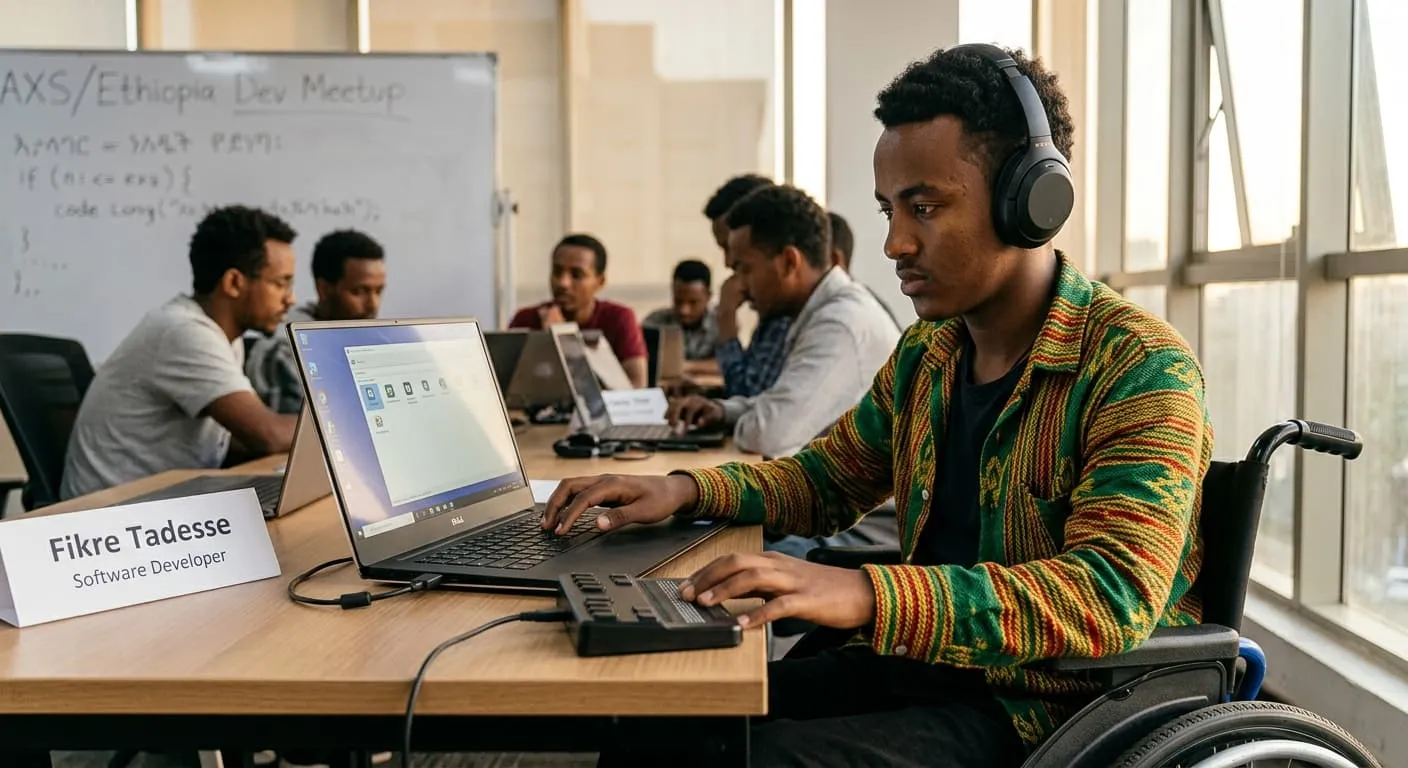
For too long, disability inclusion in Ethiopia has been framed as an act of goodwill — a ramp built here, a donation made there. But goodwill does not build careers. It does not close a literacy gap. It does not put a young woman with a visual impairment behind a laptop, running her own business.
Structural exclusion requires structural solutions. And increasingly, one of the most powerful structural solutions available is technology — not as charity, but as infrastructure for equity.
At Inclusive Growth (IG), we believe access to digital tools is no longer a peripheral concern for disability rights. It is the frontline.
The Barriers That Still Define Daily Life
Persons with Disabilities (PWDs) in Ethiopia continue to navigate a landscape built without them in mind.
Education remains structurally inaccessible. Classrooms lack trained teachers in inclusive pedagogy, Braille materials are scarce, and sign language interpretation is inconsistent even in institutions that claim to be inclusive. For a student with a disability, simply reaching graduation can mean overcoming a system, not just a curriculum.
Healthcare access is inequitable. Facilities are frequently physically inaccessible, staff are undertrained in disability-responsive care, and rural areas — where a large share of Ethiopia's population with disabilities lives — often have no specialized services at all.
Financial exclusion compounds the gap. Without accessible identification systems, adapted banking interfaces, or credit history built through formal employment, many PWDs are shut out of the financial system entirely — unable to save, borrow, or invest in a livelihood.
And then there is the digital divide. Ethiopia's digital transformation has accelerated rapidly, but assistive technology has not kept pace. Screen readers configured for Amharic and other local languages are rare. Adaptive interfaces, localized digital literacy training, and affordable adaptive hardware remain out of reach for most. The result: a new economy is emerging, and PWDs risk being locked out of it before they've even had the chance to log in.

When Barriers Compound: The Reality for Women with Disabilities
For women with disabilities, these barriers do not simply add up — they multiply.
A woman with a disability in Ethiopia often faces the structural obstacles above and the entrenched gender norms that limit women's mobility, decision-making power, and access to education and employment. She may be excluded from disability programs designed without gender in mind, and from women's economic empowerment programs designed without disability in mind.
This is intersectionality in practice — and it demands solutions designed for that intersection, not solutions borrowed from adjacent movements. A program that is disability-inclusive but gender-blind will fail women with disabilities. So will a program that is gender-responsive but disability-blind.
Technology as the New Infrastructure of Inclusion
Here is where the story shifts from barriers to possibility.
Assistive and inclusive technology is proving to be one of the fastest, most scalable ways to dismantle exclusion — often faster than physical infrastructure can be rebuilt.
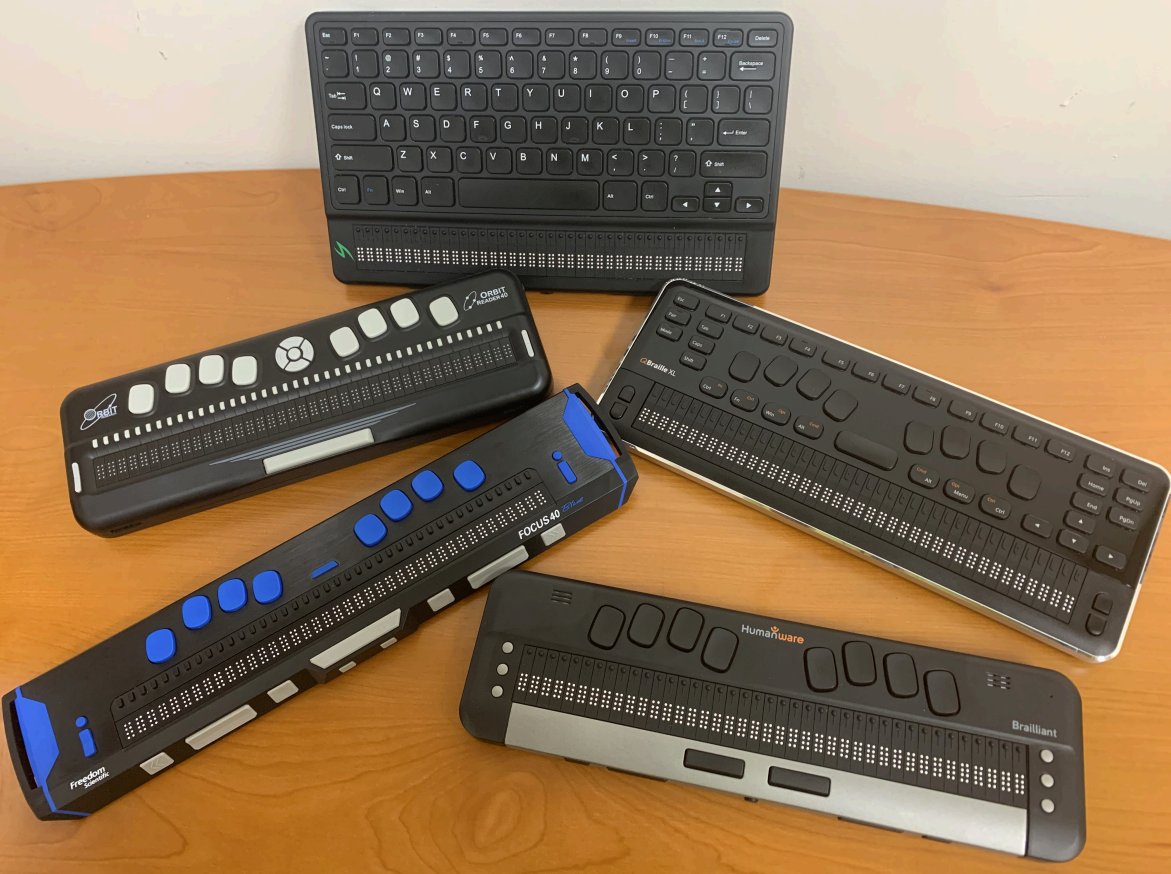
- Screen-reading software and localized text-to-speech tools are opening up education and employment for people with visual impairments — when they are adapted to Amharic and other Ethiopian languages, not imported as an afterthought.
- Adaptive hardware — from switch-access devices to modified keyboards — is turning digital exclusion into digital participation.
- Localized digital literacy training equips youth and women with disabilities not just to use technology, but to build with it: freelancing, e-commerce, digital content creation, and remote work.
- Accessible digital public platforms — government services, banking apps, job portals — determine whether a person with a disability can participate in civic and economic life as a full citizen, or remains dependent on intermediaries.
The shift we advocate for is a shift in imagination: technology is not a bonus feature for inclusion. It is the infrastructure inclusion runs on. Done right, it builds economic independence, entrepreneurship, and active citizenship — the very outcomes that charity-based models were never designed to deliver.
The Inclusive Growth Approach: "Opportunities for All, Barriers to None!"
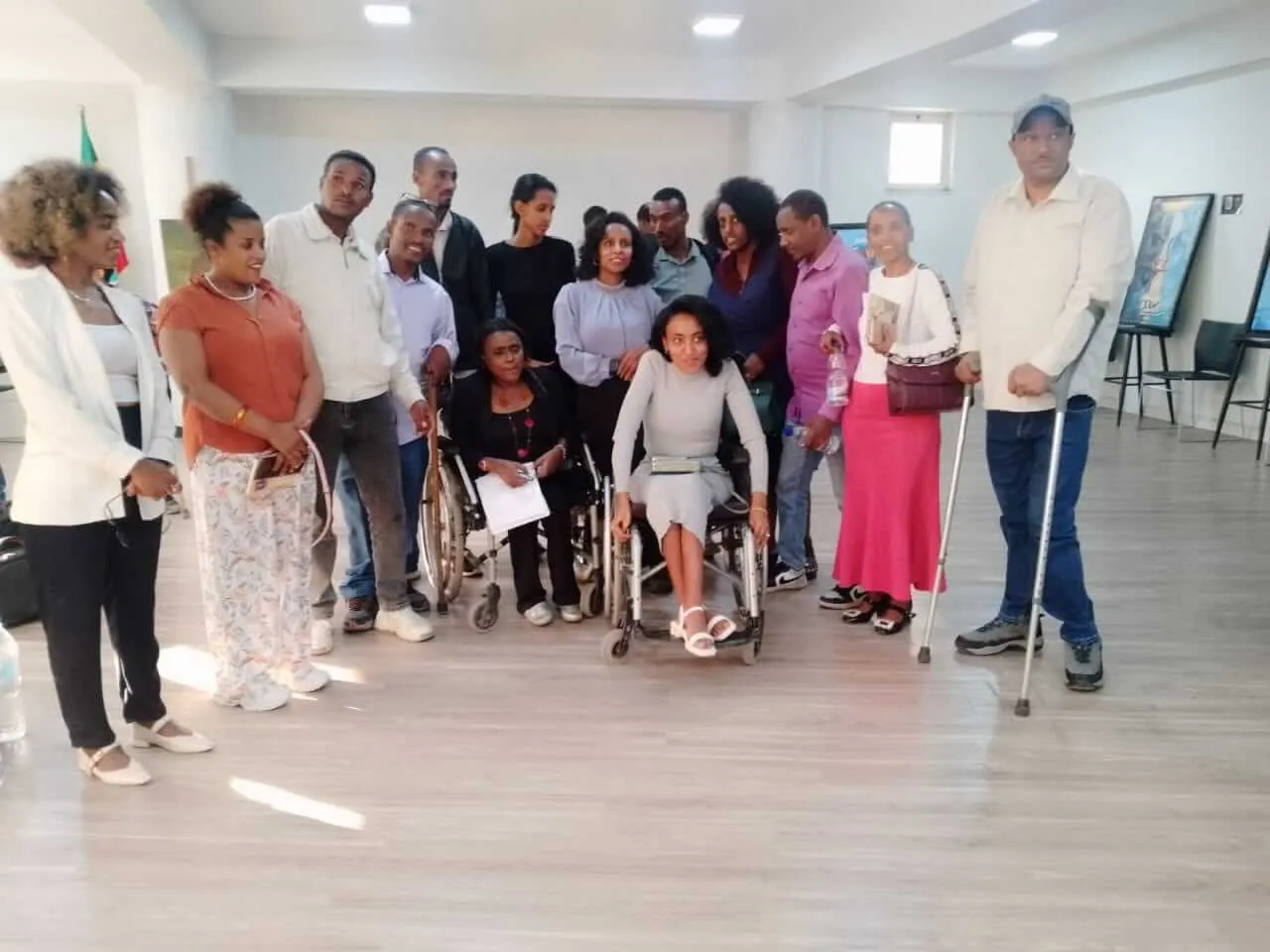
This is the philosophy IG was built on, and it starts with a simple but radical premise: people with disabilities are not beneficiaries of inclusion. They are its architects.
That's why IG operates under a 60/40 Co-Leadership Rule — ensuring that women and persons with disabilities lead and co-design at every level of our board, management, and staff, alongside allies. This is "Nothing About Us, Without Us" translated into governance structure, not just messaging.
Our work is organized through the 7-I-CHESTE Pillars, three of which anchor this conversation directly: Inclusive Technology & Digitalization, Inclusive Education, and Inclusive Economy. These pillars don't operate in isolation — they are activated through our I-CREATE S³ engine, which drives localized technology adaptation, skills-building, and systemic reform through a cycle of Innovation, Creative Expression, Response, Education Integration, Awareness Campaigns, Technology Adaptation, and Empowerment Initiatives — anchored in Skills, Systems, and Sustainability.
In practice, this means co-designing solutions with the very youth and women who will use them — not building for them, but building with them.
An Invitation to Co-Design
Barrier-free systems are not built by any single organization. They require bilateral agencies, technical innovators, public sector institutions, and international partners willing to move beyond one-off donations toward genuine, structural co-design.
We invite you to join us — not to help persons with disabilities catch up to a system built without them, but to help build a system that includes them from the start.
Opportunities for All. Barriers to None!
That is not a slogan. It is a design specification. And Inclusive Growth is ready to build it — together.
Partner with Inclusive Growth
Let's build barrier-free systems together.
Interested in partnering with Inclusive Growth on inclusive technology and digital accessibility initiatives in Ethiopia? Reach out to explore how we can co-design barrier-free systems together.